




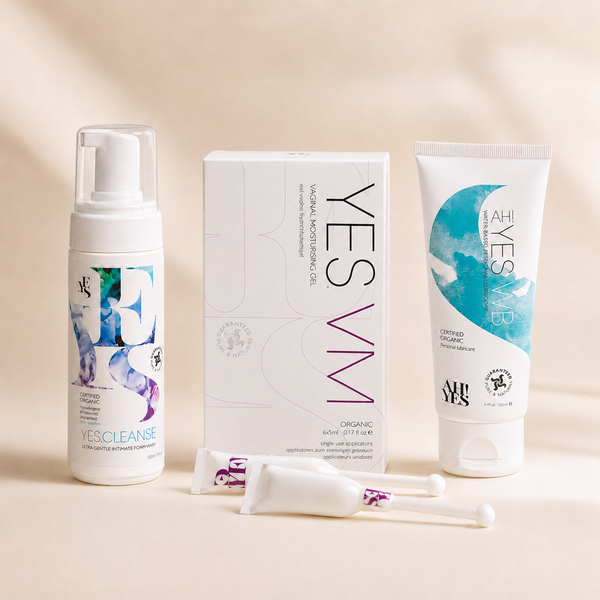


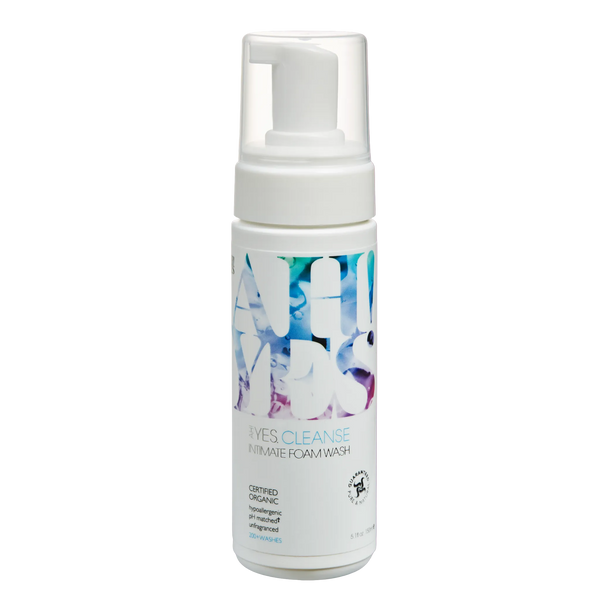
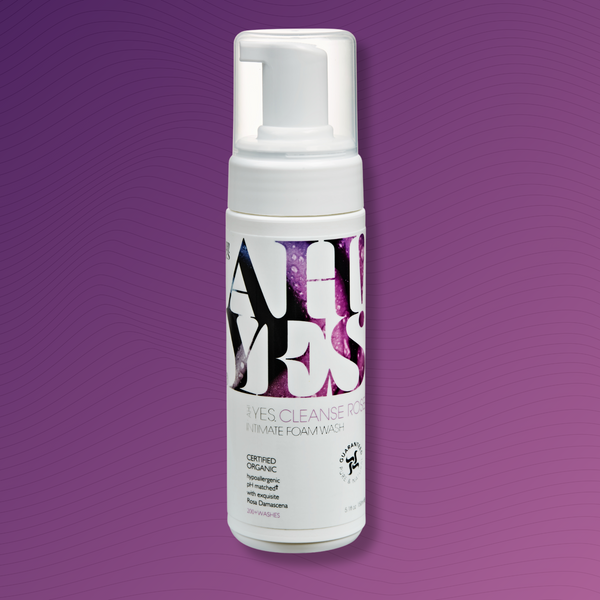

CLEANSE Intimate Wash

Scent:

Have a discount code? Add it in the next step.
4.8/5 based on 1,630 reviews
Dryness and itching have an unkind habit of feeling worse at night — just when you’re trying to switch off. If you’ve found yourself wide awake and uncomfortable, there’s a reason behind it, and there’s a gentle bedtime routine that can genuinely help.
A few things stack up after dark. With fewer daytime distractions, low-level irritation becomes more noticeable. Warmth and humidity under the covers can aggravate sensitive skin. There’s a behavioral loop too: the urge to scratch brings momentary relief but inflames already-fragile tissue, which then itches more — the classic itch–scratch cycle.
And menopause itself disrupts sleep through night sweats and shifting hormones, which lowers your overall tolerance for discomfort, so the same irritation feels louder at 3 a.m. than at 3 p.m.
THE SCIENCE IN BRIEF
Fewer distractions, overnight warmth, and the itch–scratch cycle all amplify nighttime irritation. Scratching inflames thin, dry tissue, which increases itching — a self-perpetuating loop worth interrupting. Menopause-related sleep disruption can make it feel worse.
Harsh washing, fragranced products, scented laundry detergent on underwear and bedding, synthetic non-breathable fabrics, and even some “soothing” wipes can all make nighttime itching worse. Calming the inputs often calms the symptoms.
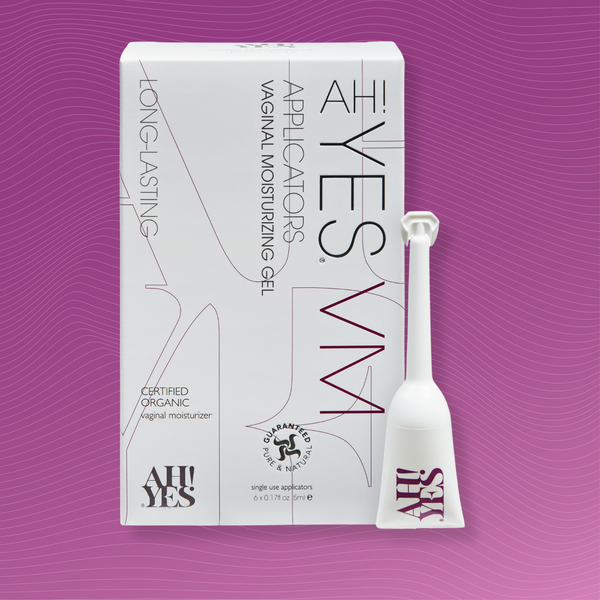
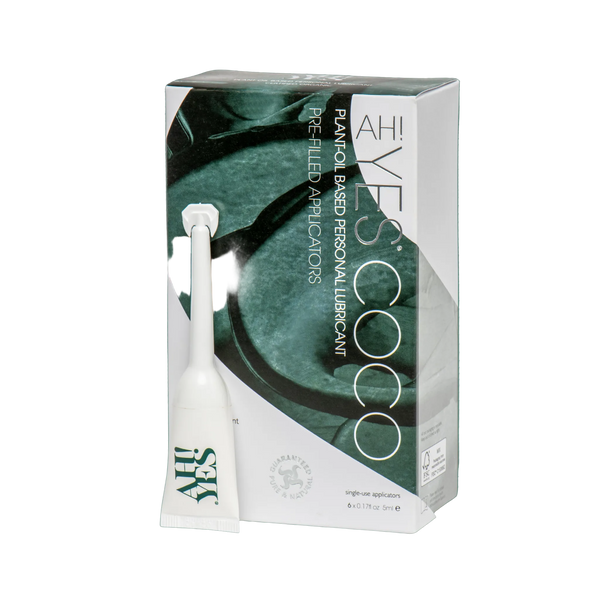
Our AH! YES Vaginal Moisturizer and AH! YES COCO can both help support overnight comfort when used according to their product directions, externally and internally as appropriate.
If itching is severe, persistent, or comes with bleeding, unusual discharge, or visible skin changes (white patches, thickening, or sores), it’s worth a checkup to rule out a skin condition such as lichen sclerosus or an infection, both of which are treatable but need a proper diagnosis.
Sources / Further Reading:
Better nights start with calmer tissue.
A soothing pre-bed routine can help quiet the itch and make it easier to get the rest you need.
Read more about the changes your body goes through during peri menopause and post menopause.


