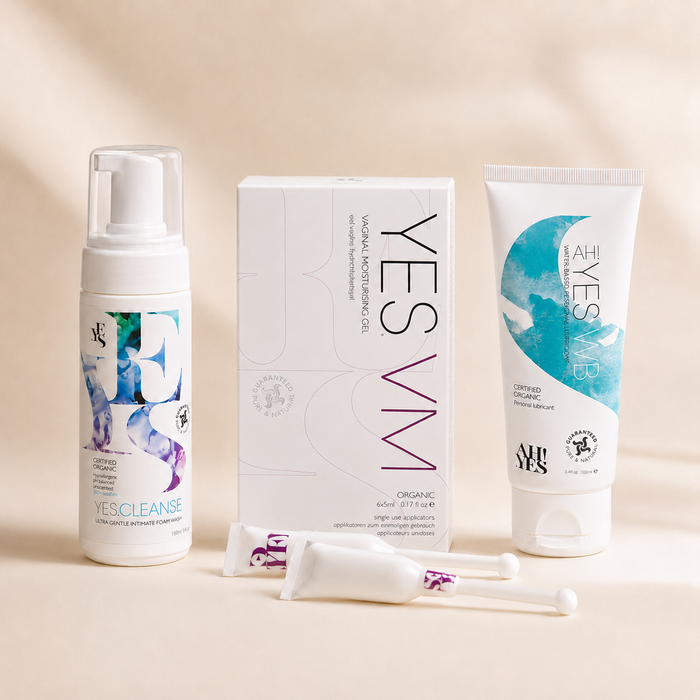
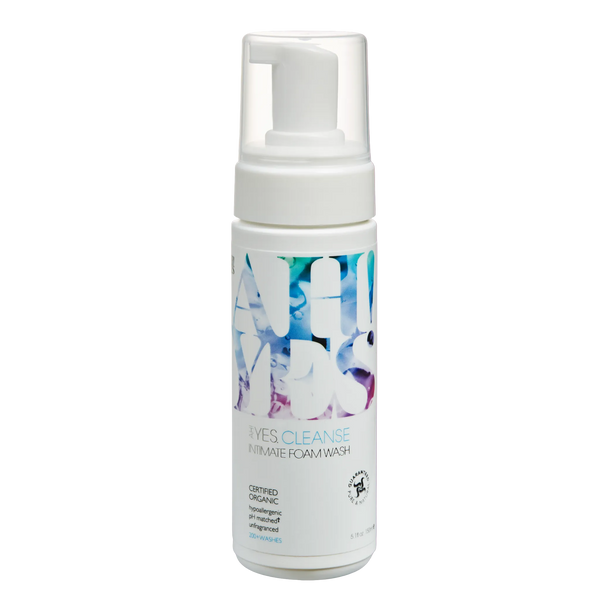
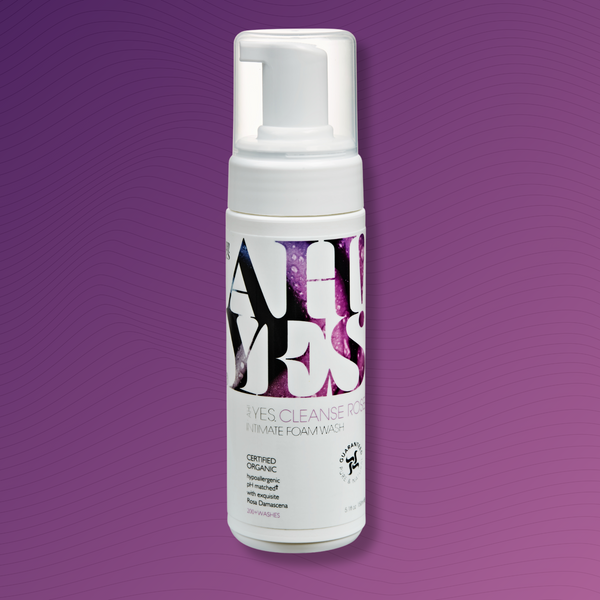

CLEANSE Intimate Wash

Scent:

Have a discount code? Add it in the next step.
4.8/5 based on 1,630 reviews
AH!YES® Guide
Many women (as much as 90% of post-menopausal women!) experience vaginal dryness. Many are searching for a natural remedy for vaginal dryness, and others seek medical intervention to find relief. Finding relief for vaginal dryness means first understanding exactly what it is and why it can occur. Vaginal dryness is common and it can happen at any time in a woman's life. It is sometimes referred to as vaginal atrophy, or atrophic vaginitis, these are slightly different conditions that can include vaginal dryness as a symptom.
While vaginal dryness is very common during perimenopause and menopause, it is not limited to midlife.
Vaginal dryness can cause itching, burning, dryness and pain during sex or day-to-day life. It can significantly affect a woman's quality of life, and some may struggle with sex and intimacy as a result. The great news is vaginal dryness can be easily managed and is not something anyone should have to suffer with.
Your intimate health guide
No one should experience the uncomfortable effects of vaginal dryness. Learn about gentle options and when to speak with your doctor.
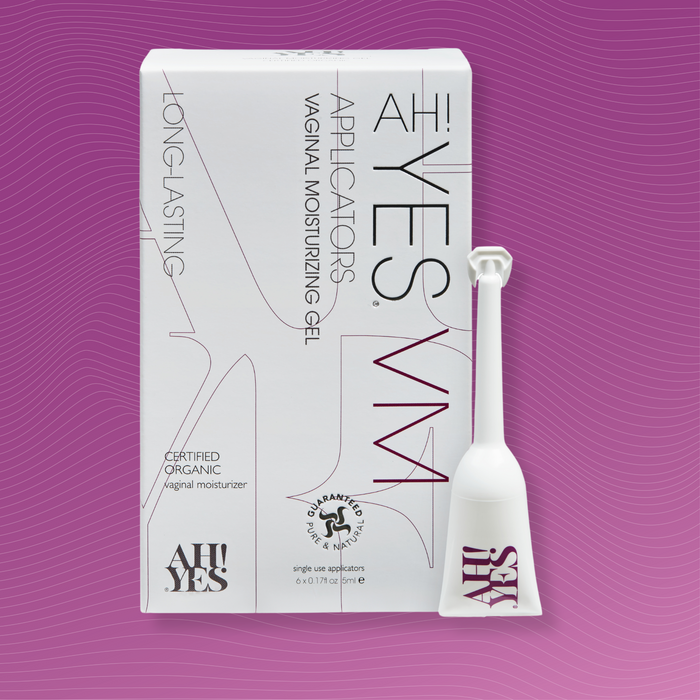
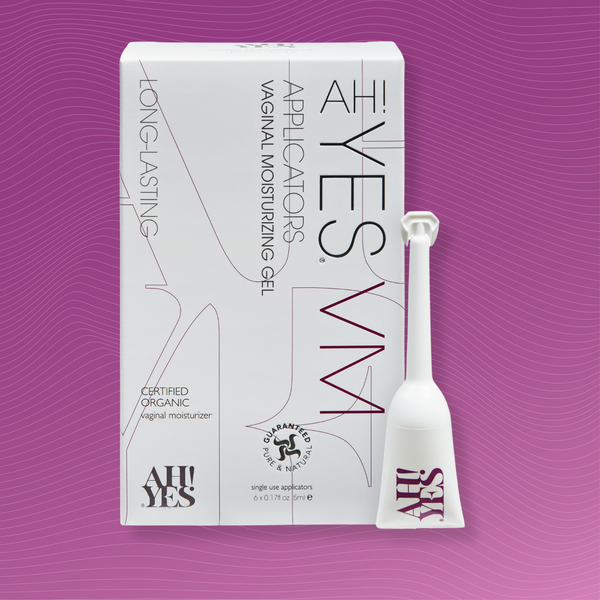
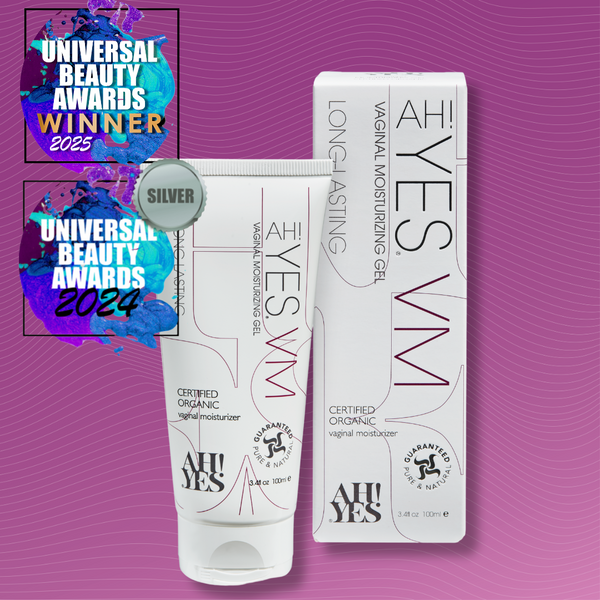
Natural vaginal moisturizers such as AH! YES® VM can be used daily to manage symptoms of dryness. Moisturizers may be applied externally or internally and can provide relief for up to three days.
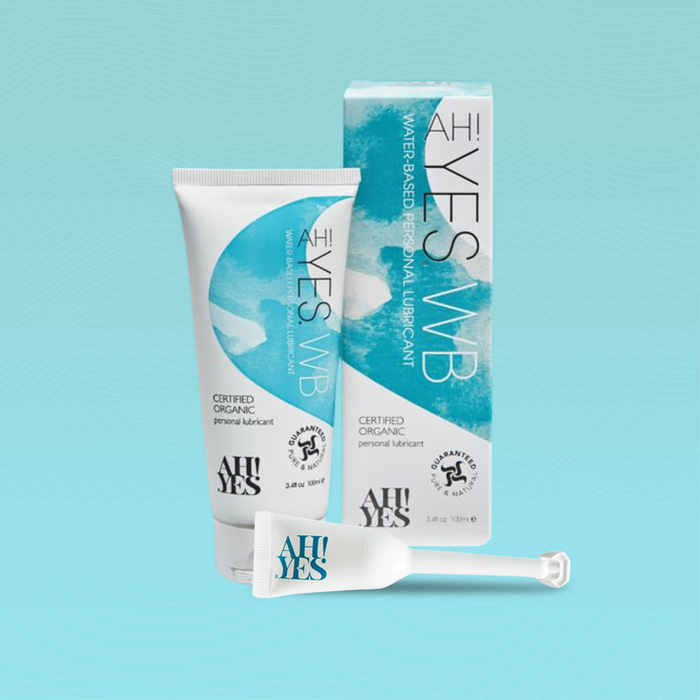
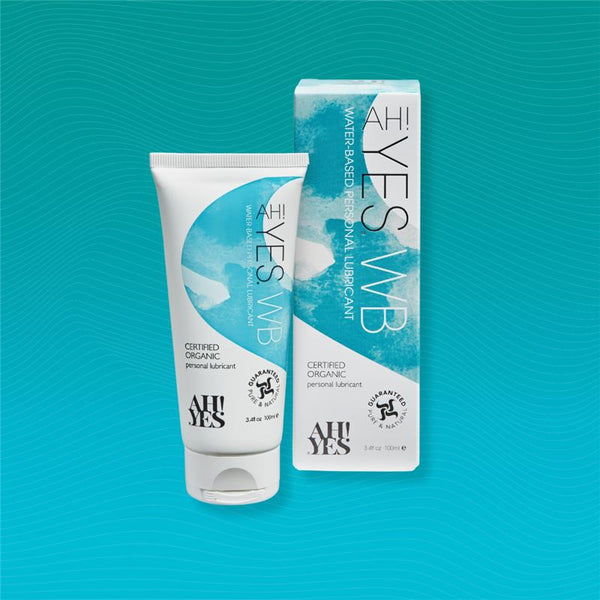
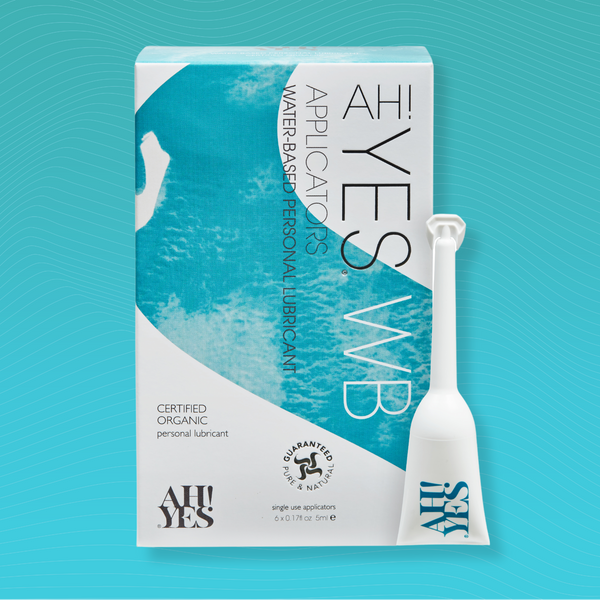
If dryness causes pain during sex or penetration, a lubricant can help. Water-based lubricants rehydrate delicate tissues, oil-based lubricants can be nourishing and long-lasting, and silicone-based lubricants provide lasting lubrication but do not rehydrate dry tissue.
If dryness is hormonal, your doctor may discuss HRT or estrogen therapy. Vaginal estrogen may be prescribed for GSM and is available as pessaries, ovules, creams or a ring. Speak with your oncologist before using vaginal estrogen after estrogen receptor positive breast cancer.
Educational guide
If you feel you have an infection, such as bacterial vaginosis, it is important to see a doctor.
A simple anatomy guide
These two terms are often used interchangeably, but they describe different parts of the body. Open each card to learn more.
The vulva is the external part of the genitals. It includes the mons pubis, labia majora, labia minora, clitoris, urethra and the opening of the vagina.
The vagina is an internal, muscular canal that extends from the cervix to the vaginal opening. It contains moist mucous membranes, like other sensitive areas of the body.
Vulval tissue combines normal skin and mucous membranes. Because mucous membranes have less protective barrier, they can be more sensitive to irritation and dryness. Choose gentle, pH-balanced products made for intimate care.
The smart-moisture difference
Some glycerin-containing lubricants and moisturizers can draw water out of already dry tissues, which may contribute to irritation.
A balanced formula is designed to match the osmotic pressure of the tissues it touches and replenish moisture as the body needs it.
A lubricant should release hydration more quickly, ideally with an osmolality close to the tissues to support comfortable intercourse.
AH! YES VM prioritizes iso-osmolality. It adheres gently to vaginal walls and is designed to release hydration as your body requires it over 1 to 3 days, rather than creating a constant wet feeling.
For a sperm-friendly lubricant, the ideal osmolality is close to that of semen, which is slightly higher than typical human tissues. Formulas should be evaluated for their intended use.
This educational information is not medical advice. If you experience persistent dryness, pain, or irritation, consult a qualified healthcare professional.
Intimate health guide
You may be familiar with the concept of the gut microbiome, but what often goes unnoticed or isn't well understood is the vaginal microbiome. The vaginal microbiome is a complex micro-ecosystem that plays a vital role in maintaining vaginal health and protecting against infections.
Lactobacilli produce lactic acid, which helps maintain vaginal pH. Several factors can affect their presence, including vaginal dryness, antibiotic use, hormonal changes, sexual activity, harsh soaps, underlying medical conditions, and stress.
The natural acidic pH of the vagina helps protect against infections. Avoid douching and harsh soaps, and choose products that are pH-balanced specifically for the vagina.
If you notice unusual odor, discharge, itching, pain, or recurring symptoms, speak with a qualified healthcare professional.
Many women with sensitive skin may experience adverse reactions to the ingredients in glycerine/glycol based lubricants, but can use all AH! YES® products with confidence due to their guaranteed pure, natural and gentle ingredients.
All AH! YES® products: